01
TMJ and jaw pain
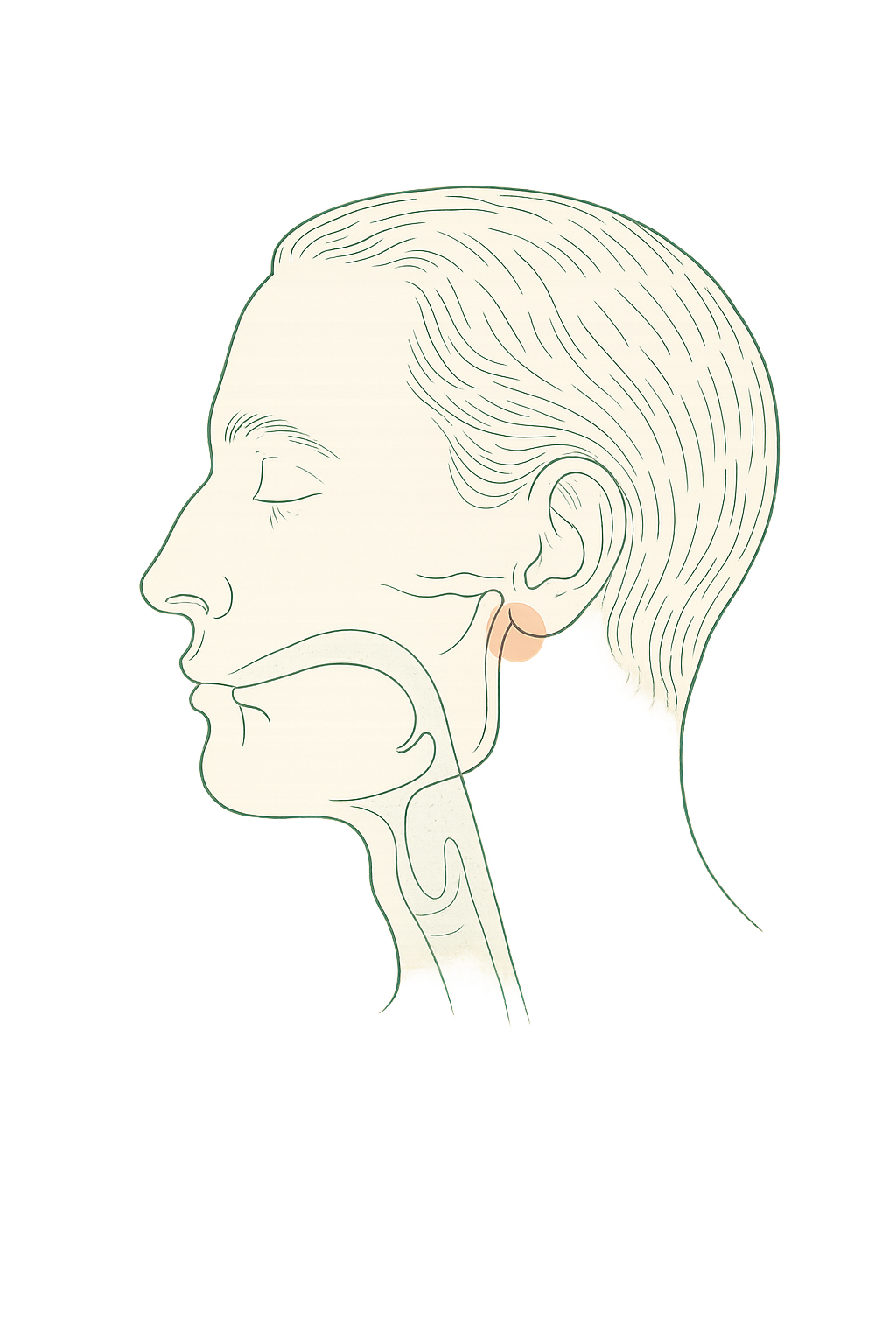
The temporomandibular joint connects the lower jaw to the skull. When the jaw sits in a position that is structurally compromised, whether due to a narrow palate, a retruded lower jaw, or bite imbalance, that joint can be placed under load it was not designed to carry.
The symptoms that follow can include clicking or popping on opening, a jaw that locks or catches, facial pain around the cheeks and temples, chronic headaches, and ear pain or fullness. These are not random occurrences. They can be traced back to how the jaw is positioned and how the surrounding structures function.
Treatment at Growth and Airway focuses on understanding that position. Where is the jaw sitting? What is driving the strain? Functional appliances, bite adjustment, and soft tissue work can all form part of an approach that addresses the mechanics rather than simply managing the discomfort.
A side-profile study of the temporomandibular joint, the jaw and joint picked out in terracotta.
Style: 19th-century engraving line, single deep-forest hairline, faces left. cf. the hero illustration.